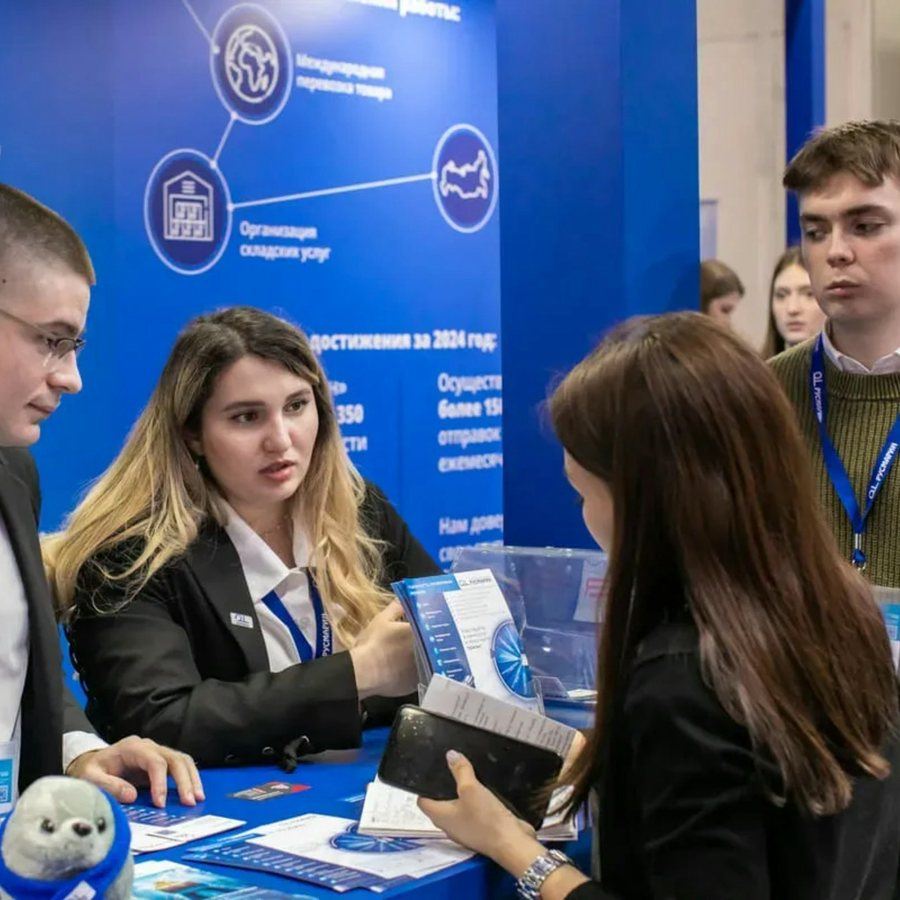
On a booth, you rarely have more than three to five minutes per visitor, standing, in the noise, with two other people waiting behind. That is not much for qualifying. And yet it is more than enough, provided you know what you are looking for.
The problem is not asking the right questions
Most salespeople spontaneously ask good questions. The problem lies elsewhere: what they learn does not survive the day.
When you talk with a visitor, you pick up much more than what you write down. The tone used to describe the current supplier, the hesitation about the budget, the sentence "I would have to run it by management" dropped at the end of the exchange. That information is real, it is decisive for the follow-up, and it is written nowhere.
It stays in your working memory for between fifteen and forty minutes. After three visitors, it is gone. In the evening, all that remains is a business card and a vague memory. That is the invisible cost of every trade show, and it is higher than the price of the booth.
The one rule to take away from this article: the context gets written down before the next visitor, never after.
The five criteria that suffice: the BRIDGE framework
At beTIK, we use a five-point framework, designed to be remembered while standing and filled in within thirty seconds. It is called BRIDGE.
B for Business need and problem
What concrete problem is the visitor trying to solve? Not "they are interested in our range", but the problem in their own words.
The question that works: "What brings you to this show this year?" Then stay silent.
R for potential Revenue
What volume, what budget, what order of magnitude for the deal. A range is enough: it is what will let you sort two hundred contacts.
The question that works: "What volumes are you working with today?" Less blunt than "what is your budget", and more informative.
I for Implementation and feasibility
What the visitor already has in place, and what a change would involve technically. This is where most of the deals lost six months later are hiding.
The question that works: "How do you handle it today?"
D for Decision and organization
Who decides, who influences, who signs. At a trade show, you very often talk to an influencer who does not hold the budget. That is not a problem, as long as you know it.
The question that works: "On this kind of topic, who do you decide with internally?"
G/E for Go for Engagement
The timeline and the level of intent. A three-month project and a "someday maybe" project are not followed up at the same time nor in the same way.
The question that works: "What timeline are you aiming for?"
Do not ask the five questions in a row
This is the classic misreading. A visitor subjected to five closed questions in a burst shuts down. The goal is not to run through a checklist, it is to come out of the conversation with an answer, even a rough one, on all five points.
In practice: ask a single broad opening question, let them talk, and probe only on what is missing. A good trade show conversation is 70% silence on your side.
Temperature: the only sorting that matters
Right after the exchange, assign a rating in one second: hot, warm, cold.
- Hot. Problem identified, plausible budget, short timeline, contact who decides or is close to the decision.
- Warm. Genuine interest but one criterion is missing, no confirmed budget, distant timeline, or a peripheral contact.
- Cold. Curiosity, competitive intelligence, a student, or simply outside your target.
This rating taken in the moment is remarkably reliable. The same rating assigned on Friday evening while sorting cards is worthless. And it is what will determine your follow-up order, in other words the bulk of your conversion.
Own the act of disqualifying
A booth that talks to everyone talks to no one. At shows with heavy general-public or student traffic, one filtering question asked upfront saves the team several hours a day. VivaTech is the textbook example.
Phrased politely, it offends no one: "What use case are you looking for a solution for?" If the answer is "just looking", you stay courteous, you hand over a brochure, and you make yourself available for the next visitor.
How ProspecTIK holds the three minutes
The BRIDGE framework is only worth something if it gets filled in. That is exactly what ProspecTIK automates:
- Scanning the business card, badge or QR code creates the complete lead record, with no typing.
- You dictate a thirty-second voice memo as you leave the visitor. The AI transcribes it, pre-fills the five BRIDGE criteria, calculates a score and suggests a temperature.
- You correct it in two taps if needed, and you move on to the next visitor.
The audio is never stored: it is analyzed on the fly, and only the form and the summary remain in the record. The details are in our privacy policy.
For the next step in the journey, read post-show follow-up, or go back to the complete guide.